Deck & Fence Staining: When to Stain vs. Paint
Paint and stain both protect wood, but they behave very differently. Here is how to choose the right product for your deck or fence — and how to know when it is time to recoat.
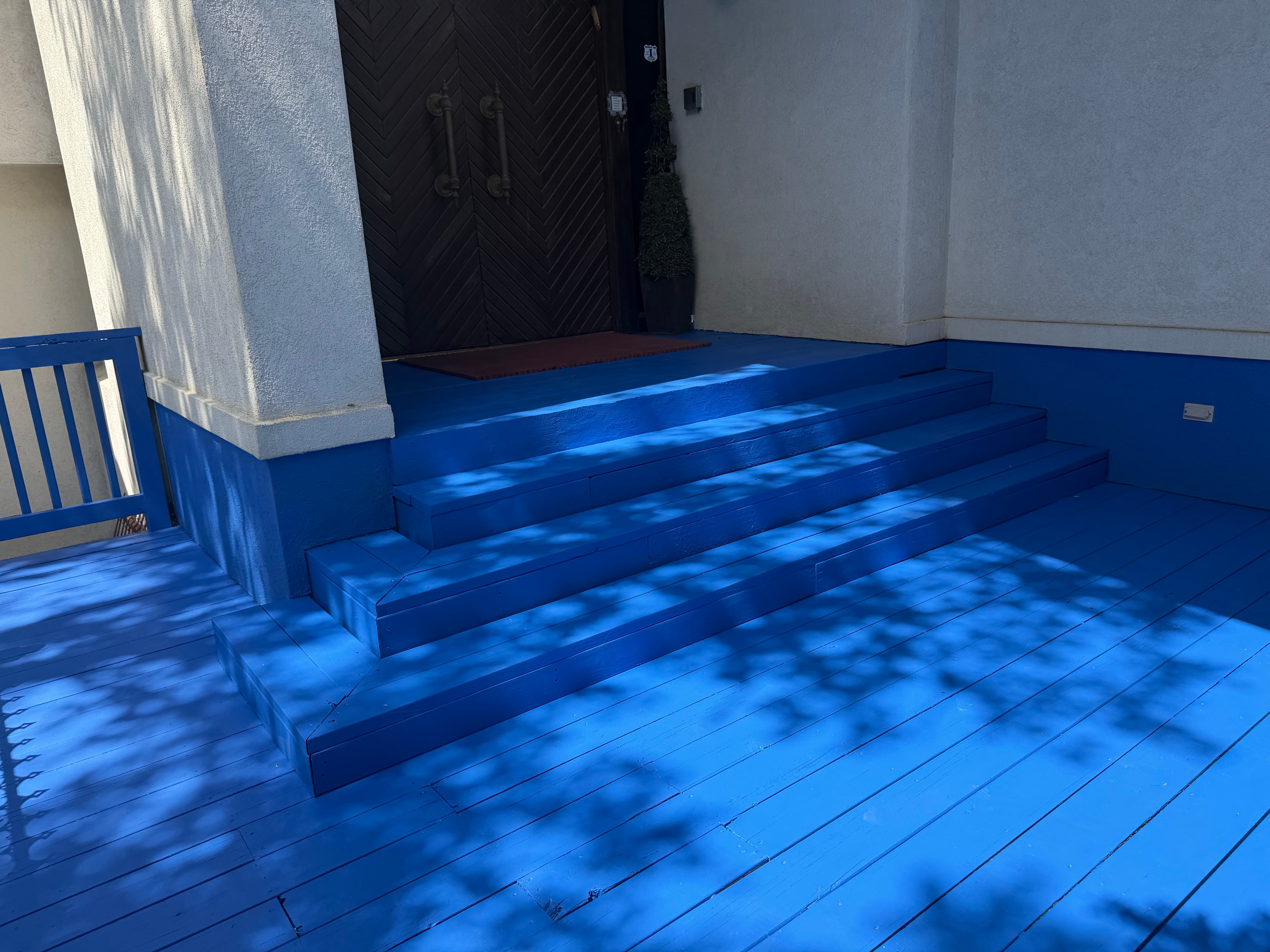
Your deck and fence take more abuse than almost any other surface on your property. They are exposed to full sun, rain, temperature swings, foot traffic, and in San Antonio, the occasional hailstorm. Protecting them properly — and choosing the right product — makes a significant difference in how long they last.
Here is a practical guide to stain vs. paint for exterior wood, and how to know when it is time to recoat.
Stain vs. Paint: The Key Difference
Paint forms a film on top of the wood surface. It provides excellent protection and completely hides the wood grain. When it fails, it peels — and peeling paint requires significant prep work (scraping, sanding) before recoating.
Stain penetrates into the wood fibers rather than forming a surface film. It enhances the natural wood grain rather than hiding it. When stain wears out, it fades rather than peeling — which means recoating is much easier (clean the surface, apply a new coat, done).
When to Choose Stain
Stain is the right choice for most decks and fences in San Antonio. Here is why:
Easier maintenance: Because stain fades rather than peels, recoating is straightforward. You do not need to strip or sand before applying a new coat — just clean the surface and reapply.
Natural appearance: If you like the look of wood grain, stain preserves it. Semi-transparent stains show the most grain; solid stains hide the grain but still penetrate the wood.
Better for weathered wood: Stain works well on wood that has already been exposed to the elements. Paint requires a very clean, sound surface to adhere properly.
Decks specifically: Most deck professionals recommend stain over paint for horizontal deck surfaces. Paint on a deck floor is prone to peeling because foot traffic, moisture, and UV exposure are all working against it simultaneously.
Types of Stain
Transparent stain: Maximum grain visibility, minimum protection. Needs recoating every 1–2 years.
Semi-transparent stain: Good balance of grain visibility and protection. Recoat every 2–3 years.
Semi-solid stain: More color, less grain visible. Good protection. Recoat every 3–5 years.
Solid stain: Looks similar to paint but penetrates the wood. Hides grain completely. Recoat every 4–6 years.
When to Choose Paint
Paint makes sense for fences and exterior wood trim in certain situations:
You want maximum color options: Paint comes in any color. Stain options are more limited, especially for bold colors.
The wood has already been painted: If your fence or deck has been painted before, you generally need to continue with paint. Applying stain over paint does not work — the stain cannot penetrate through the paint film.
Vertical surfaces like fences: Paint holds up better on vertical surfaces than on horizontal ones because water runs off rather than pooling. A painted fence can look great for 5–7 years with proper prep.
You want a specific decorative look: For fences that are part of a home's exterior design scheme, paint allows you to match trim colors exactly.
How Long Does Each Last in San Antonio?
San Antonio's climate is tough on exterior wood — intense UV, summer heat, and occasional heavy rain all accelerate wear.
| Product | Typical Lifespan in San Antonio |
|---|---|
| Transparent stain | 1–2 years |
| Semi-transparent stain | 2–3 years |
| Semi-solid stain | 3–4 years |
| Solid stain | 4–5 years |
| Paint (vertical surfaces) | 5–7 years |
| Paint (horizontal/deck) | 2–4 years (prone to peeling) |
Signs It Is Time to Recoat
For stain: Water no longer beads on the surface (it soaks in instead), the color has faded significantly, or the wood looks dry and gray.
For paint: Peeling, cracking, or significant fading. Do not wait until the paint is completely failing — repainting over a sound surface is much easier than repainting over peeling paint.
Prep Is Everything
Regardless of whether you choose stain or paint, proper preparation is the most important factor in a long-lasting result:
- Clean the surface: Pressure wash to remove dirt, mildew, and old chalking
- Let it dry completely: Wood must be dry before applying any coating — typically 48–72 hours after washing
- Sand rough areas: Smooth any splinters or rough spots
- Apply a wood brightener (for stain projects): Restores the wood's natural pH and opens the grain for better penetration
- Prime bare wood (for paint projects): Primer is essential for paint adhesion on bare or weathered wood
Key Takeaways
- Stain penetrates wood and fades gracefully; paint forms a film and peels when it fails
- Stain is generally better for decks; paint works well for vertical fence surfaces
- Recoating stain is easier than repainting — no stripping or heavy sanding required
- San Antonio's climate shortens the lifespan of all exterior coatings
- Proper prep (cleaning, drying, sanding) is the most important factor in longevity
Explore Topics
Written by
Riverside Painters Team
Content creator and writer sharing insights and stories.